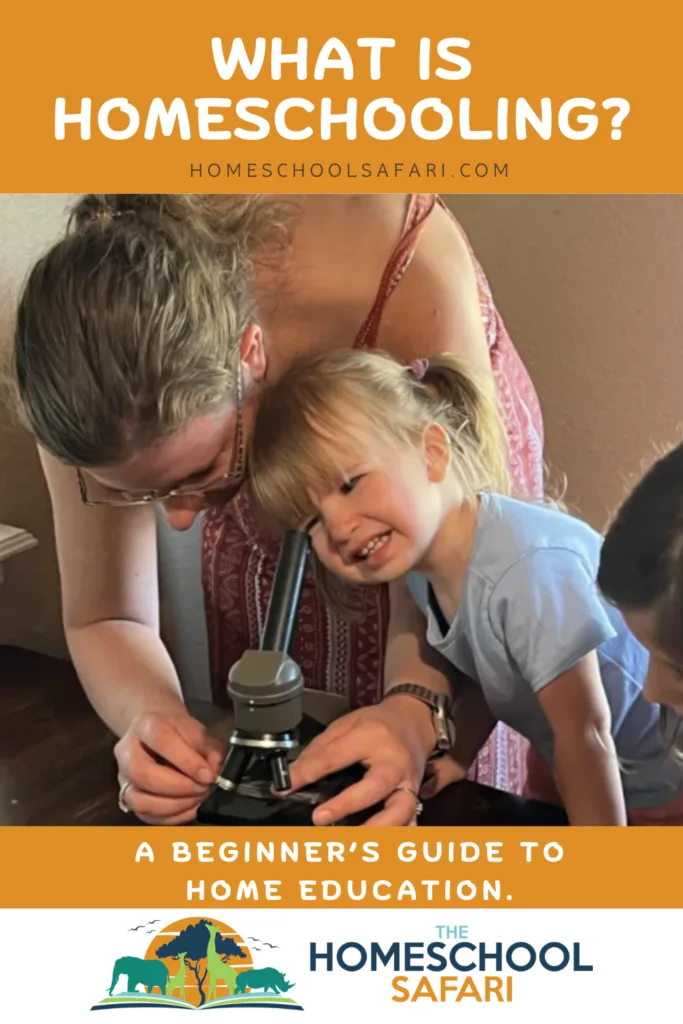
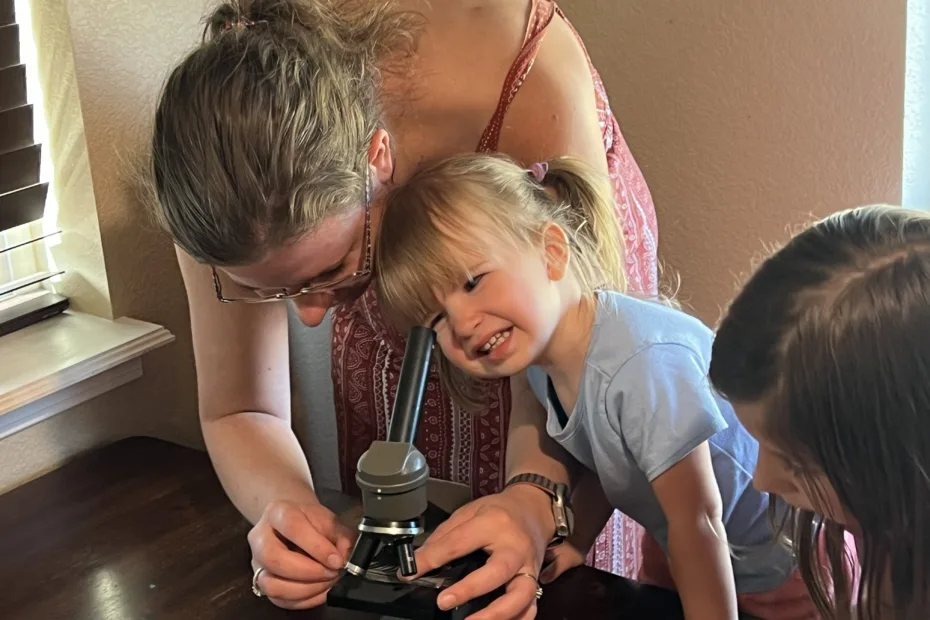
What is Homeschooling? A Beginner’s Guide to Home Education.
What is homeschooling? Homeschooling is a flexible way for families to educate their children outside of a traditional school setting. Parents can choose curriculum, learning routines, classes, activities, and support that fit their child’s needs.
Homeschooling is gaining a lot of attention recently, as more and more parents are pulling their children out of school. Before the COVID pandemic, an estimated 2.5 million students were home-schooled (about 3%). That number has continued to steadily increase since then, and the US Census Bureau estimates that roughly 3.4 million students were homeschooling during the 2024-2025 school year, with an average increase of 5% per year. Despite its growing popularity, there is still a lot of confusion surrounding the nature of homeschooling- what it is and how it works. This article answers some of those questions.
The term “homeschooling” is a bit of a misnomer. Many families do the majority of their structured learning at home, but it isn’t a requirement.
Homeschooling simply means that parents are the primary facilitators of their children’s education. Parents choose what their children learn, who teaches it, when and where the learning takes place, and what accommodations can be made based on their children’s individual personalities and learning styles.
There are a number of reasons why homeschooling has become more popular recently.
Some parents are worried about safety in schools- from shooters, sexual predators, drugs, bullies, etc. Some parents are concerned that the wrong things may be being taught in schools, or that students are being pushed through and graduated without the basic skills they need to succeed outside of the school room. In 2024, 32% of high schoolers graduated with below basic proficiency in reading and 45% graduated with below basic proficiency in math. Almost half of students exit the school system without the basic skills they need to be successful adults.
For various reasons, parents are choosing to take responsibility for their children’s education. What they are finding, is there is a lot of freedom in the homeschool process- freedom to teach on a flexible schedule, freedom to tailor the learning experience to the child, and freedom to grow family relationships along the way.
What Does Homeschooling Look Like?
It is different for every family, but at its foundation, homeschooling is learning that is parent or guardian led.
- Parents choose a curriculum, create their own, or hire an approved teacher or tutor for their children.
- Parents approve a routine that considers the natural rhythms and needs of the child and the family. (Rather than taking all day, formal learning can be reduced down to 30 minutes- 4 hours, depending on the age and ability of the child. This means children can sleep in or do other activities during the day.)
- Parents plan the school schedule around family trips, upcoming life events, and pause “school” as needed when unforeseen sickness and life events come up.
- Parents select extracurricular activities based on family values, priorities, and child interests.
- Parents experiment with different learning environments and rhythms to help their children learn more effectively. If a child learns better while listening to music, they can listen to music during book work. If a child needs to fidget or take constant breaks, you can allow them to do that. If a child concentrates better while eating a snack, that can be accommodated.
- Parents guide the education process in a way that accounts for the unique needs of the family and the child.
This can seem overwhelming at first. It’s easy to fall into the trap of thinking that home education has to look exactly like public school education. But, the most successful homeschool families march to the beat of their own drums. Besides, why imitate something that is clearly failing?
The good news is: there are numerous resource options available now to help make homeschooling easier.
Homeschool Safari is a homeschool support company that supports parents as the primary educators of their children. There are also online programs, microschools, co-ops and homeschool groups, and so much more! No one has to do it all themselves. In fact, learning from other people is beneficial to children as they experience different learning styles and perspectives. The key is that you get to decide what your child learns, who teaches it, and what support your family needs along the way.
You’ve got this!