
Free and Low-Cost Summer Activities for Homeschool Kids
Summer is a wonderful time for homeschool families to slow down, explore new interests, and make learning feel like an adventure.
You do not need an expensive vacation, a packed schedule, or a long list of paid activities to give your children a meaningful summer. Many of the best summer learning experiences can happen at home, in your backyard, at the library, in your community, or online.
If you are looking for simple, fun, and educational summer activities for homeschool kids, here are several ideas your family can try.
What Are Some Free Summer Activities for Homeschool Kids?
There are many free and low-cost ways to keep homeschool kids learning during the summer. The key is to choose activities that feel fun, flexible, and connected to real life.
Summer is a great time to focus on:
- Nature study
- Reading
- Science experiments
- Life skills
- Community service
- Creative projects
- Family connection
- Online learning opportunities
- Hands-on exploration
You can use these ideas as a summer bucket list, weekly activity plan, or simple way to keep learning alive without making summer feel like school.
How Can Homeschool Families Use Nature Walks for Summer Learning?
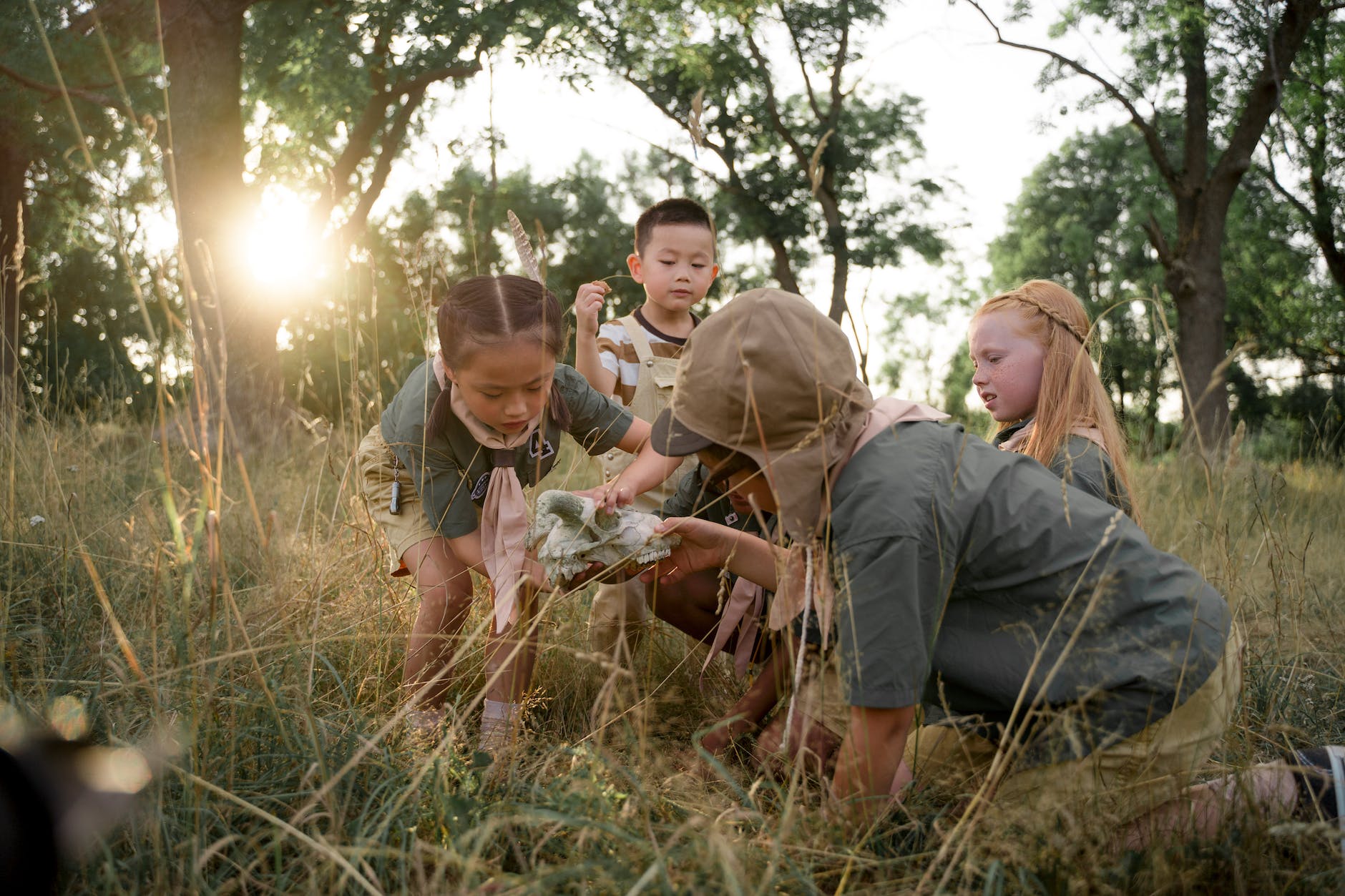
Visit local parks, nature reserves, walking trails, or hiking areas and turn them into outdoor classrooms.
During a nature walk, children can observe plants, insects, birds, rocks, animal tracks, weather, and seasonal changes. You can bring a notebook and have your child sketch what they see, write down questions, or collect observations. You can also use the Wonder Explorer app to record what you find.
Try asking:
- What plants do we notice today?
- What insects or animals can we find?
- How has the weather affected what we see?
- What sounds do we hear?
- What do we want to learn more about?
Nature walks are simple, free, and perfect for homeschool science, writing, art, and observation skills.
How Can You Make a Backyard Campout Educational?
A backyard campout can feel like a big adventure without leaving home.
Set up a tent, gather blankets, roast marshmallows, tell stories, read outside, and look at the stars. You can also turn the night into a learning experience by studying constellations, nocturnal animals, weather, camping safety, or storytelling.
Backyard camping can include:
- Stargazing
- Nature journaling
- Campfire stories
- Reading aloud
- Learning about animal sounds at night
- Practicing basic outdoor skills
- Making simple campfire snacks
- Mathematical Nature Walk
This is a great way to create summer memories while keeping the learning light and fun.
How Can a Scavenger Hunt Help Kids Learn?
Scavenger hunts are easy to create and can be used for almost any subject.
You can make a scavenger hunt indoors, outdoors, at the park, in the library, or even during a car ride. Create a list of items for your children to find, or write clues that lead them from one place to another.
Scavenger hunt ideas include:
- Nature scavenger hunt
- Color scavenger hunt
- Shape scavenger hunt
- Letter or sound hunt
- Math fact hunt
- Vocabulary word hunt
- Book character hunt
- Household item hunt
- Outdoor texture hunt
Scavenger hunts help children practice observation, problem-solving, reading, and critical thinking.
Why Should Homeschool Kids Start a Summer Garden?
Gardening is one of the best hands-on summer learning activities.
You can plant seeds in a backyard garden, raised bed, small container, balcony pot, or windowsill planter. Children can help water, weed, measure growth, observe changes, and record what happens over time.
Gardening teaches:
- Plant life cycles
- Responsibility
- Patience
- Weather awareness
- Measurement
- Nutrition
- Observation
- Care for living things
You can make it even more educational by having your child keep a garden journal, draw plant growth each week, or research the fruits, vegetables, or flowers you are growing.
How Can the Library Support Homeschool Kids During Summer?
The local library is one of the best free resources for homeschool families.
Many libraries offer summer reading programs, story times, workshops, clubs, craft days, and special events for children. You can also borrow books, audiobooks, educational DVDs, and sometimes even digital resources or learning kits.
Summer library ideas:
- Join a summer reading challenge
- Pick a weekly theme
- Borrow books about science, history, art, or nature
- Attend story time or workshops
- Ask a librarian for book recommendations
- Create a family read-aloud basket
- Use library books for unit studies
The library can help homeschool families keep reading skills strong without making summer feel like a worksheet.
What Are Easy Summer Science Experiments for Homeschool Kids?
A DIY science experiment lab can be simple and fun.
You do not need expensive supplies. Many science experiments can be done with items you already have at home, such as baking soda, vinegar, food coloring, water, paper towels, cups, magnets, balloons, and kitchen ingredients.
Simple summer science ideas:
- Sink or float experiments
- Baking soda and vinegar reactions
- Homemade slime
- Ice melting experiments
- Plant growth observations
- Shadow tracking
- Weather charting
- Water cycle in a bag
- Kitchen chemistry
- Magnet exploration
Science experiments help children ask questions, make predictions, observe results, and explain what happened.
How Can Families Make Movie Night or Game Night Educational?
Movie nights and game nights can also become meaningful learning experiences.
For movie night, choose a family-friendly movie connected to a book, historical event, animal, culture, or topic you are studying. Afterward, talk about the characters, setting, problem, solution, and lesson.
For game night, use board games, card games, word games, math games, or strategy games. You can even have your children create their own game.
Educational skills from games include:
- Counting
- Reading
- Taking turns
- Strategy
- Problem-solving
- Following directions
- Communication
- Good sportsmanship
This is a fun way to learn while spending quality time together.
Can Homeschool Families Explore Museums Online?
Yes. Many museums, zoos, historical sites, and cultural institutions offer virtual tours, online exhibits, videos, and educational activities.
This allows homeschool families to explore history, art, science, animals, geography, and world cultures from home. Some museums also offer free admission days, so check local museum websites for family events or discounted days.
Online museum activities can include:
- Virtual field trips
- Art observation
- History discussions
- Animal research
- Science videos
- Timeline projects
- Map activities
- Notebooking pages
Virtual field trips are especially helpful when travel is not possible.
What Skills Can Homeschool Kids Learn During Summer?
Summer is a great time to learn a new skill or hobby.
Instead of filling every day with formal schoolwork, give your children time to explore interests. They may discover something they love.
Summer skill ideas include:
- Cooking
- Baking
- Painting
- Drawing
- Sewing
- Knitting
- Photography
- Gardening
- Coding
- Music
- Woodworking
- Typing
- Creative writing
- Learning a new language
Children can learn through books, videos, tutorials, family members, community classes, or online resources.
How Can Kids Practice a New Language During Summer?
Summer is a wonderful time to introduce Spanish, Mandarin, or another language in a relaxed way.
Your child can start with simple daily practice:
- Learn greetings
- Practice numbers
- Sing songs
- Label household objects
- Watch short language videos
- Practice colors and animals
- Use flashcards
- Read bilingual books
- Try short conversations
Language learning does not have to be difficult or stressful. Even a few minutes a day can help children build confidence and curiosity.
If your family wants more support, private online Spanish lessons can also help students hear correct pronunciation and practice speaking with a teacher.
How Can Homeschool Families Volunteer During Summer?
Volunteering is a meaningful way to help children learn empathy, responsibility, and community awareness.
Look for simple family-friendly volunteer opportunities, such as:
- Helping at a food bank
- Cleaning up a park
- Supporting a community garden
- Writing cards for older people
- Donating gently used items
- Helping a neighbor
- Collecting supplies for a local organization
- Participating in a church or community service project
Volunteering helps children see that learning is not only about academics. It is also about character, compassion, and serving others.
Are Online Summer Camps a Good Option for Homeschool Kids?
Online summer camps can be a helpful option for families who want structure without driving across town every day.
Online camps can give children a chance to try something new, meet other students, stay engaged, and keep a flexible schedule. They can be especially helpful for working parents, families with multiple children, or homeschool families who want summer learning without a full school routine.
How Can Parents Plan a Simple Summer Homeschool Schedule?
You do not need a strict summer schedule, but a loose weekly rhythm can help.
Try choosing one or two activities each week from different categories:
- One outdoor activity
- One reading activity
- One creative project
- One science activity
- One life skill
- One community or service activity
- One online learning opportunity
A simple weekly plan gives children something to look forward to without overwhelming the family.
Example summer rhythm:
- Monday: Library day
- Tuesday: Nature walk
- Wednesday: Science experiment
- Thursday: Creative project
- Friday: Movie, game, or field trip day
You can adjust this based on your family’s schedule, energy, and interests.
What Is the Most Important Part of Summer Learning?
The most important part of summer learning is connection.
Your children do not need a perfect activity schedule. They need time to explore, rest, read, create, ask questions, and enjoy learning in a relaxed way.
A meaningful homeschool summer can be simple. Plan a few activities each week, follow your child’s curiosity, and look for ways to make learning part of everyday life.
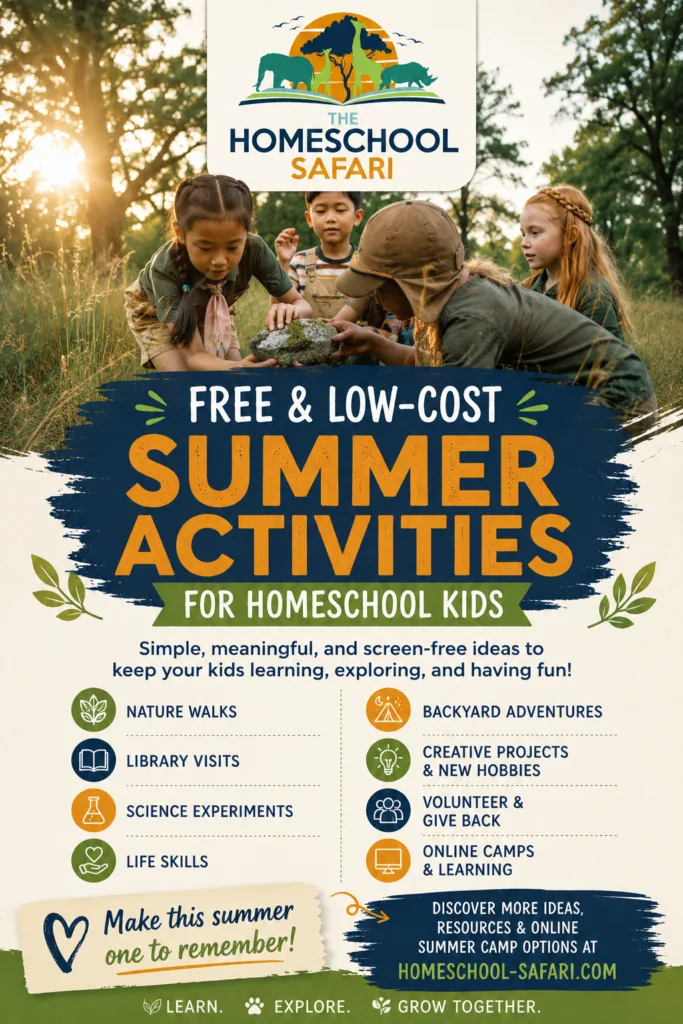
With nature walks, library visits, science experiments, games, volunteer opportunities, new skills, and online camps, your homeschool kids can have an adventurous summer full of learning and growth.
Frequently Asked Questions
What are the best free summer activities for homeschool kids?
Some of the best free summer activities for homeschool kids include nature walks, library programs, backyard camping, scavenger hunts, science experiments, gardening, game nights, virtual museum tours, and community volunteering.
How do I keep my homeschool kids learning during summer?
Keep summer learning simple and fun. Use short activities, real-life learning, reading, outdoor exploration, hands-on projects, and a flexible weekly routine.
Should homeschool kids do schoolwork during summer?
Some families continue light schoolwork during summer, while others focus on reading, life skills, outdoor learning, or enrichment. The best choice depends on your family’s goals and your child’s needs.
How can I make summer educational without making it feel like school?
Choose activities that feel natural and fun, such as cooking, gardening, exploring nature, playing games, visiting the library, doing science experiments, and learning through projects.
Are online summer camps good for homeschool families?
Online summer camps can be a good fit for homeschool families who want structure, enrichment, social connection, and flexible learning from home.
Final Thoughts
There are many fun and educational summer activities for homeschool kids that do not have to cost much money.
Visit a park. Start a garden. Read at the library. Try a science experiment. Learn a new skill. Serve your community. Explore a museum online. Join an online summer camp. Most of all, enjoy time together.
Planning a few simple activities each week can help your children feel like they had an adventurous, meaningful summer while still giving your family time to rest and recharge.
Let the summer adventure begin.e they had an adventurous summer.